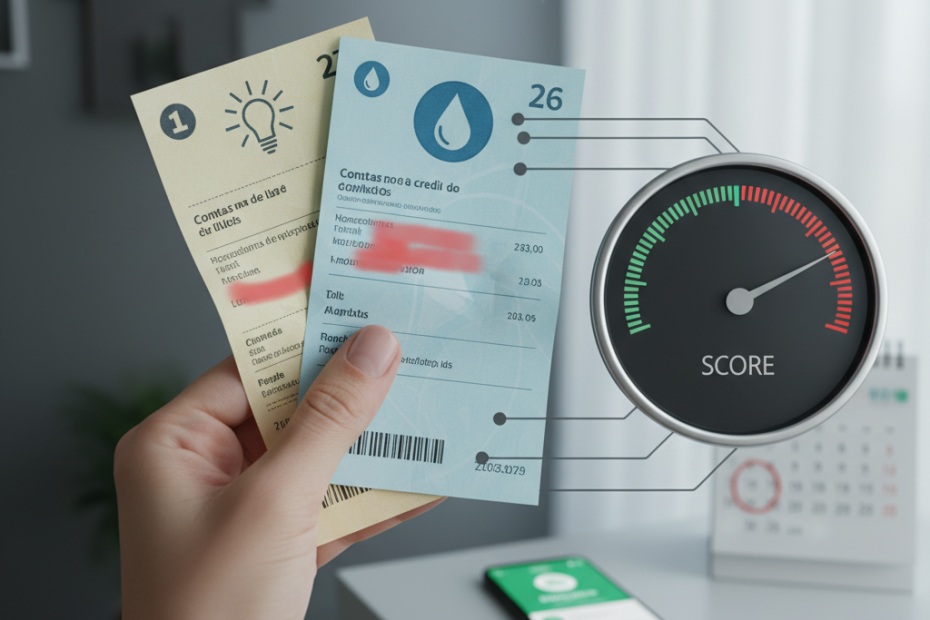
Additional Information: Understanding the complexity of the credit scoring system is essential for maintaining financial health. Many consumers are unaware of the influence that paying basic bills, such as electricity and water, can have on their credit score. In Brazil, Cadastro Positivo (Positive Registry) has gained prominence, allowing good payment habits to be considered in credit assessments. However, late payment of these bills, even if not directly reported to credit bureaus, can lead to negative consequences, especially if the debt is registered in default databases. This article details how late bills affect credit score and what you can do to prevent it. Read on to learn how to protect your score and keep your finances in order.
Do Late Utility Bills Affect Your Credit Score?
Yes, late bills affect credit score. Although it’s not a direct and immediate relationship, late payment of electricity and water bills can indeed affect your credit score. To understand better, let’s detail how this happens.
How Credit Score Works
The credit score is a rating that indicates the probability of a consumer paying their bills on time. It is used by financial institutions to assess the risk of granting credit, such as loans, financing, and credit cards. This score generally ranges from 0 to 1000, where a higher number means a lower risk of default.
Several factors are taken into account to calculate the score, such as:
- Payment history: whether you pay your bills on time.
- Defaulted debts: if you have overdue and defaulted debts.
- Length of credit history: how long you have used financial services.
- Types of credit you use: if you have many credit cards, loans, etc.
- Inquiries on your CPF (Brazilian taxpayer ID): how many times your CPF has been consulted by companies for credit analysis.
The Indirect Relationship Between Utility Bills and Score
Electricity and water bills, by themselves, are not directly considered in the credit score calculation by major bureaus (like Serasa and Boa Vista). However, non-payment of these bills can lead to your name being listed as a defaulter, and this is where the problem begins.
When you don’t pay an electricity or water bill, the utility company may include your name in default databases, such as SPC and Serasa. This inclusion is a negative factor for your score, as it indicates that you have overdue debts.
Cadastro Positivo and Utility Bills
Cadastro Positivo is a system that collects information about consumers’ payment history, including electricity and water bills. Contrary to what many think, it doesn’t just serve to penalize those who don’t pay bills on time. In fact, its main goal is to show that you are a good payer, which can increase your credit score.
If you have a good payment history for your electricity and water bills, this can be positively considered by Cadastro Positivo, helping to improve your score. However, it’s important to remember that Cadastro Positivo is not yet widely used by companies to assess credit risk, but its importance is growing.
How Delinquency Practically Affects Your Score
Let’s imagine the following scenario: you forget to pay your electricity bill for two consecutive months. The energy company, after several contact attempts, decides to list your name in the defaulter database. At this point, your credit score is negatively impacted.
The impact can vary depending on your credit history. If you already have other defaulted debts, the effect will be even greater. On the other hand, if you have always paid your bills on time and this is the first time your name is listed as a defaulter, the impact may be smaller, but still significant.
What to Do to Prevent Late Bills from Affecting Your Score
The best way to prevent late bills affecting credit score is, obviously, to pay all your bills on time. To do this, you can adopt some strategies:
- Organize your finances: create a financial plan to know how much you earn and how much you spend per month.
- Automate payments: set up automatic debit for electricity and water bills. This way, you avoid forgetting and delays.
- Use reminders: use apps or phone alarms to remind you of bill due dates.
- Negotiate debts: if you already have overdue debts, try to negotiate with companies to get a discount or installment plan.
How to Resolve the Situation in Case of Delay
If you already have late bills affecting credit score, the first step is to resolve the situation as quickly as possible. Contact the electricity and water utility companies and negotiate the payment of the debts. After payment, request the removal of your name from the defaulter databases.
It is important to remember that, even after your name is removed from the defaulter databases, the negative impact on your score may take some time to disappear. This is because payment history is one of the factors considered in the score calculation.
The Role of Open Finance in Credit Assessment
Open Finance is a system that allows the sharing of financial data between different institutions, with the customer’s consent. This can include information about the payment of electricity and water bills, provided you authorize the sharing of this data.
With Open Finance, financial institutions can have a more complete view of your financial profile, which can influence the assessment of your credit risk. If you have a good payment history for your electricity and water bills, Open Finance can help you get better credit conditions.
Other Tips to Maintain a Positive Score
Besides paying electricity and water bills on time, here are other tips that can help you maintain a positive credit score:
- Keep your registration data updated: inform companies and financial institutions of any changes in address or phone number.
- Avoid applying for too many credit cards: having too many cards can indicate that you are relying on credit to pay your bills.
- Use credit consciously: don’t spend more than you can afford and avoid paying for purchases in installments over long periods.
- Monitor your score regularly: keep track of your credit score to check for any changes and identify potential problems.
How to Check Your Credit Score for Free
You can check your credit score for free on the Serasa and Boa Vista websites. Simply create an account and follow the instructions. It is important to monitor your score regularly to identify potential problems and take steps to correct them.
Remember that your credit score is an important tool for your financial life. By taking care of your score, you increase your chances of getting credit with better conditions and achieving your goals.
Summary
- Late bills affecting credit score can negatively impact your credit rating.
- Late payment of electricity and water bills can lead to your name being listed as a defaulter.
- Cadastro Positivo can help improve your score if you pay your bills on time.
- Organize your finances and automate payments to avoid delays.
- Resolve the situation as quickly as possible in case of delay.
Tips
- Maintain strict control over your finances.
- Automate bill payments to avoid forgetting.
- Check your credit score regularly.