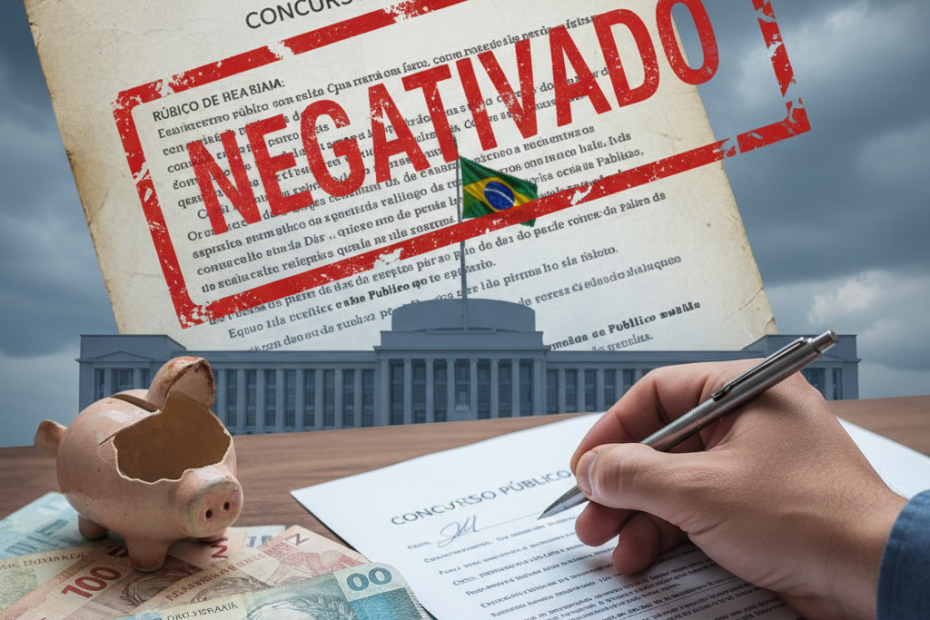
Meta Description: Discover if having a ‘dirty name’ can prevent your appointment in a public service exam. Understand the legal requirements and how this situation affects your public service career.
Additional Information: This article explores in detail the implications of having a negative credit record regarding approval and appointment in public service exams in Brazil. We will cover the relevant legislation, the evaluation criteria used by examining boards, and the resources available to candidates in this situation. Furthermore, we will provide practical guidance on how to regularize your financial situation and increase your chances of success in public service exams. This comprehensive guide is essential for anyone seeking a career in public service and wishing to avoid unpleasant surprises during the selection process.
Can a ‘Dirty Name’ Prevent You From Taking a Public Service Exam?
The concern about whether a negative credit record public exam can prevent appointment to a public position is common among exam candidates. After all, after being approved, no one wants their nomination blocked due to pending financial issues. Let’s understand this matter better.
What Does It Mean to Have a ‘Dirty Name’?
Having a dirty name, also known as having a negative credit record, means you have unpaid debts that have been registered with credit protection agencies, such as Serasa and SPC. These debts can be of various natures, such as utility bills (water, electricity, phone), credit card statements, loans, financing, among others.
Legislation and Public Service Exams
Brazilian legislation does not expressly prohibit individuals with a negative credit record public exam from taking public office. The Federal Constitution establishes the basic requirements for holding public office, which include:
- Brazilian nationality;
- Enjoyment of political rights;
- Being up-to-date with military and electoral obligations;
- The required level of education for the position;
- Minimum age of 18 years;
- Physical and mental fitness.
Law No. 8.112/90, which governs the legal regime of civil public servants of the Union, autarchies, and federal public foundations, also does not mention the issue of a negative credit record public exam as an impediment to appointment.
The Exam Announcement (Edital)
It is crucial to carefully analyze the exam announcement (edital). Some announcements may stipulate the need for the candidate to prove moral and financial integrity. In such cases, having restrictions on one’s name may be considered a negative factor, depending on the examining board’s interpretation.
The requirement for moral and financial integrity must be expressly stated in the announcement and justified by the nature of the position. For example, positions involving the handling of public funds or the supervision of financial activities may have stricter criteria.
Analysis of Jurisprudence
Brazilian jurisprudence on the subject is varied. In some cases, courts have held that a restriction on a negative credit record public exam cannot be an absolute impediment to appointment, unless there is a direct relationship between the debt and the nature of the position. For instance, a candidate approved for the position of tax auditor cannot be prevented from taking office solely for having debts, unless it is proven that they used fraudulent practices to incur these debts.
In other cases, courts have considered that the existence of debts may indicate a lack of responsibility and commitment from the candidate, which can be a negative factor in assessing their moral integrity.
How a ‘Dirty Name’ Can Affect Your Appointment
Even if legislation does not expressly prohibit the appointment of individuals with a negative credit record public exam, this situation can lead to some problems:
- Social Investigation: In some exams, a social investigation is conducted to verify the candidate’s conduct. The existence of debts may be considered a negative factor in this assessment.
- Assessment of Moral Integrity: As mentioned earlier, some announcements require proof of moral integrity. Having restrictions on one’s name may be interpreted as a lack of integrity.
- Discretion of Public Administration: The public administration has some discretion in evaluating the requirements for appointment. While it cannot act arbitrarily, it may consider the candidate’s financial situation as a relevant factor.
What to Do If You Have a ‘Dirty Name’ and Were Approved in an Exam
If you have been approved in a public service exam and have a dirty name, it is important to take some steps to increase your chances of appointment:
- Regularize Your Financial Situation: Seek to negotiate your debts with creditors and try to pay them off as quickly as possible. Presenting proof of payment or agreement can be a positive factor in assessing your integrity.
- Prepare for the Social Investigation: Gather documents that prove your good conduct, such as statements from neighbors, employers, and other individuals who can attest to your integrity.
- Talk to the Examining Board: If possible, talk to the examining board and explain your financial situation. Demonstrate that you are taking steps to regularize your debts and that you are committed to the position.
- Seek Legal Advice: If you feel prejudiced, consult a lawyer specializing in public service exams to analyze your case and defend your rights.
Is Judicial Recourse Possible?
Yes, judicial recourse is possible if you are prevented from taking office in a public service exam solely due to having a negative credit record public exam. However, it is important to keep in mind that each case is unique, and the judicial decision will depend on the specific circumstances. To increase your chances of success, it is essential to:
- Gather evidence that you are taking steps to regularize your financial situation.
- Demonstrate that the restriction on your name is not related to the nature of the position.
- Prove that you meet the moral integrity requirements stipulated in the announcement.
The Importance of Transparency
Being transparent about your financial situation is crucial. Attempting to conceal information or present false documents can be even more detrimental. Be honest and show that you are willing to resolve your financial problems.
How to Avoid a ‘Dirty Name’
The best way to avoid problems with a dirty name is to keep your accounts up to date. To do this, follow these tips:
- Control your spending: Record all your expenses and avoid spending more than you earn.
- Pay your bills on time: Schedule your bill payments before the due date and avoid interest and fines.
- Negotiate your debts: If you are having difficulty paying your bills, contact your creditors and try to negotiate an agreement.
- Avoid excessive credit card use: Credit cards can be a villain if you don’t know how to use them responsibly.
Conclusion
In summary, having a negative credit record public exam is not an absolute impediment to taking a public office, but it can cause some problems. It is essential to analyze the exam announcement, regularize your financial situation, prepare for the social investigation, and, if necessary, seek legal guidance. Transparency and honesty are always the best options.
Summary
Approved for a public service exam but worried about a dirty name? Although not an automatic barrier, your financial situation can influence the outcome. The exam announcement and jurisprudence are your guides. Regularize debts, prepare for the social investigation, and seek legal support if needed to secure your appointment.
Tips
- Read the exam announcement carefully.
- Regularize your financial situation as soon as possible.
- Prepare for the social investigation.
- Be transparent about your financial situation.
- Seek legal advice if necessary.