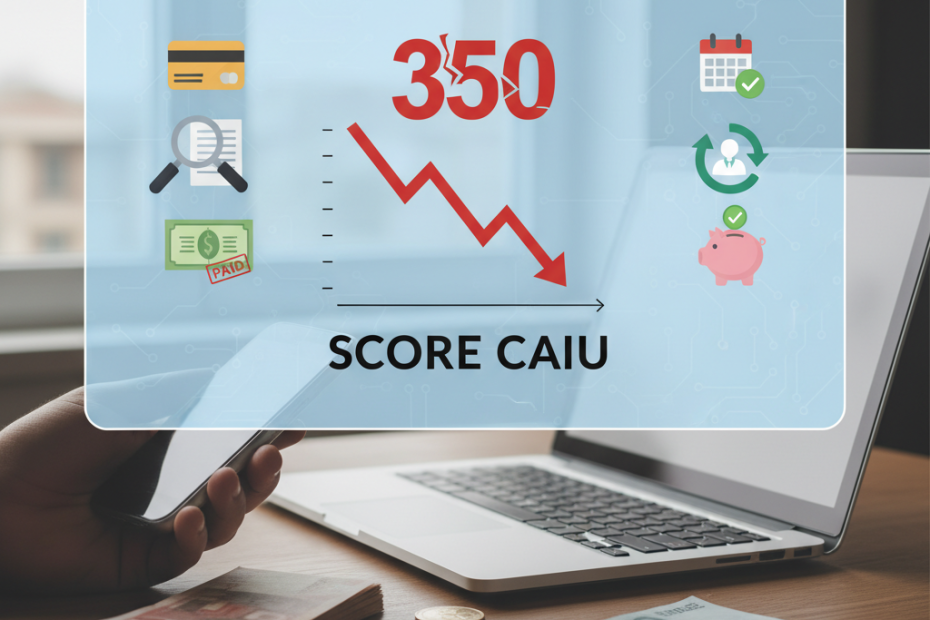
Understanding credit score dynamics can be challenging, especially when you strive to keep your bills up to date. The frustration of seeing your credit score dropped even with all payments made is understandable. But don’t worry, there are several factors that influence this score, and not all are directly linked to late payments.
This article was created to help you unravel the mysteries behind your credit score. We will explore the possible reasons for this unexpected drop, from excessive credit card limit usage to outdated personal information. Additionally, we will provide practical tips to monitor and improve your score, ensuring you have access to better credit conditions in the future.
Understanding Your Credit Score
Your credit score is a score that generally ranges from 0 to 1000, used by financial institutions to assess the risk of granting credit to a consumer. This score reflects your payment history, the use of available credit, and other factors indicating your ability to meet financial commitments. A high score means you are a good payer, while a low score can make it difficult to obtain loans, financing, and even get a credit card approved.
The main companies that calculate credit scores in Brazil are Serasa and Boa Vista. Each uses its own criteria and statistical models, but both consider the same basic factors.
Why Did My Score Drop Even Though I Paid My Bills On Time?
Even if you keep your payments strictly on time, there are other factors that can negatively impact your score. Let’s explore some of the most common causes:
1. High Credit Card Limit Usage
Using a large portion of your credit card limit, even if you pay the full balance, can indicate financial disorganization and increase the risk of default in the eyes of financial institutions. The ideal is to keep your limit usage below 30%.
2. Many CPF Inquiries
When you apply for credit from multiple companies in a short period, each inquiry to your CPF (Brazilian individual taxpayer registry) is recorded. A large number of inquiries can signal that you are desperate for credit, which can be seen as a risk by financial institutions. This can cause your credit score dropped.
3. Old Prescribed Debts
Even if a debt has prescribed (meaning the company can no longer legally collect it), it may still appear on your credit history for a certain period. This can negatively affect your score, even if you are no longer legally obligated to pay it. After 5 years, the debt should be removed from your record.
4. Outdated Personal Information
Keeping your personal information updated with credit protection agencies (Serasa and Boa Vista) is crucial. Outdated information can hinder the identification of your payment history and consequently impact your score.
5. Payment History of Other Bills
Your score doesn’t just consider credit bills (cards, loans, financing). Utility bills like water, electricity, phone, and gas can also influence your score if you delay payments and the utility company reports the debt to credit protection agencies.
6. Length of Credit History
Individuals with little credit history may have a lower score, even if they pay all bills on time. This is because financial institutions have less information to assess the risk of granting credit.
7. Errors in Positive Credit Report
The Cadastro Positivo (Positive Credit Report) compiles detailed information about your payment history and can help increase your score. However, if there are errors in this information, your score can be negatively affected. It’s important to regularly check your Cadastro Positivo and correct any mistakes.
8. Judicial Decision
Having lawsuits can also cause your credit score dropped, even if you’ve paid all your bills. This is because it indicates you are involved in a legal process, which can be perceived as a risk.
9. Volatile Score
It’s important to remember that your credit score is a dynamic and volatile tool that can change daily depending on your financial behavior and market information. A small dip doesn’t necessarily mean you’ve done something wrong.
How to Monitor and Improve Your Score
Monitoring your credit score is essential to understand how financial institutions perceive you and identify areas for improvement. There are several free online tools that allow you to check your score and track its progress.
To improve your score, follow these tips:
- Always pay your bills on time: Prioritize paying all your bills, avoiding delays and defaults.
- Keep your credit card limit usage below 30%: Avoid using a large portion of your limit, even if you pay the bill in full.
- Avoid applying for credit from multiple companies simultaneously: Focus your applications on one or two financial institutions.
- Update your personal information with credit protection agencies: Keep your information always up-to-date.
- Check your Cadastro Positivo and correct any errors: The Cadastro Positivo can help increase your score, but ensure the information is accurate.
- Negotiate your debts: If you have overdue debts, negotiate with creditors to settle them and clear your name.
- Be patient: Improving your credit score takes time and financial discipline. Don’t expect immediate results.
Remember that your credit score dropped doesn’t mean the end of the world. With planning, organization, and financial discipline, you can reverse this situation and build a solid and trustworthy credit history.
Impact of Your Score on Your Financial Life
A dropped credit score directly impacts your financial life, affecting your ability to access credit and obtain better terms. A high score opens doors to:
- Lower interest rates: The higher your score, the lower the interest rates you’ll pay on loans, financing, and credit cards.
- Higher credit limits: A good score allows you to get higher credit card limits, giving you more flexibility for your purchases.
- Easier credit approval: With a high score, your chances of having a credit application approved are much greater.
- Access to exclusive financial products and services: Some financial institutions offer exclusive products and services to customers with good scores.
On the other hand, a dropped credit score can lead to the following difficulties:
- Difficulty obtaining credit: A low score can make it hard to get loans, financing, and credit cards approved.
- Higher interest rates: If you manage to get credit with a low score, you’ll have to pay higher interest rates.
- Reduced credit limits: A low score can limit your access to an adequate credit limit.
- Restrictions on service contracts: Some companies may deny service contracts (like rental agreements or phone plans) to individuals with low scores.
Therefore, maintaining a good credit score is essential for a healthy financial life and achieving your goals.
Conclusion
While it’s frustrating to see your credit score dropped even when paying bills on time, you now understand that various factors influence this score. By monitoring your score, following improvement tips, and maintaining good financial health, you’ll be on the right track to building a solid and trustworthy credit history. Remember that consistency and discipline are key to achieving your financial goals and accessing better credit opportunities.
Summary
Extra Tips
- Automate your payments: Set up automatic debits to avoid forgetting and delays.
- Create a budget: Plan your expenses and income to avoid debt and maintain financial control.
- Invest in financial education: Learn more about personal finance to make smarter, more conscious decisions.